Point and click adventure games hold a special place in my heart as one of gaming’s most beloved genres. From classic titles like Monkey Island and Myst to modern gems like Thimbleweed Park, these games have captivated players with their unique blend of storytelling puzzles and exploration.
I’ve spent countless hours immersed in these digital worlds where every object might hold a clue and every conversation could unlock the next chapter of the story. While the genre may have evolved since its golden age in the 1990s it’s experiencing a remarkable renaissance thanks to independent developers and a passionate community that keeps the spirit of adventure alive.
Key Takeaways
- Point and click adventure games combine storytelling, puzzle-solving, and exploration through a mouse-driven interface where players interact with virtual environments.
- The genre’s golden age (1987-1995) was dominated by LucasArts and Sierra On-Line, who pioneered innovations like the SCUMM engine, VGA graphics, and professional voice acting.
- Core gameplay elements include environmental interaction, inventory management, dialog systems, and logic-based puzzle solving that advances the narrative.
- Modern point and click adventures blend classic mechanics with contemporary features like HD graphics, streamlined interfaces, and cross-platform compatibility.
- The genre experienced a revival in the 2010s through indie developers and crowdfunding, producing critically acclaimed titles like Thimbleweed Park and Return of the Obra Dinn.
- These games significantly influenced gaming culture by establishing standards for interactive storytelling, character development, and interface design that persist across multiple genres today.
What Are Point and Click Adventure Games
Point and click adventure games are interactive digital experiences where players navigate virtual environments by clicking objects using a cursor to solve puzzles progress through a story. I’ve explored countless titles in this genre where the emphasis lies on narrative immersion detailed world-building through deliberate interaction.
Key Gameplay Elements
- Environmental Interaction: Players click on items rooms characters to examine collect or interact with them
- Inventory Management: Collected objects combine in specific ways to solve puzzles overcome obstacles
- Dialog Systems: Conversations with NPCs reveal crucial story elements provide clues through branching dialog options
- Puzzle Solving: Logic-based challenges range from combining inventory items to solving complex mechanical riddles
- Story Progression: Actions puzzles dialogs advance a predetermined narrative with occasional branching paths
Historical Origins
The point and click genre emerged from text adventures in the 1980s with the introduction of graphic interfaces mouse controls. Here are the key developments:
| Year | Milestone Game | Innovation |
|---|---|---|
| 1984 | King’s Quest | First adventure game with animated graphics |
| 1987 | Maniac Mansion | Introduction of SCUMM engine verb-based interface |
| 1990 | The Secret of Monkey Island | Refined point-and-click mechanics humor-driven narrative |
| 1993 | Myst | Breakthrough in pre-rendered 3D graphics first-person perspective |
The SCUMM (Script Creation Utility for Maniac Mansion) engine by LucasArts standardized the interface that defined classic point and click mechanics. Sierra On-Line’s Adventure Game Interpreter (AGI) engine created parallel innovations in graphic adventure gameplay systems.
The Golden Age of Point and Click Adventures
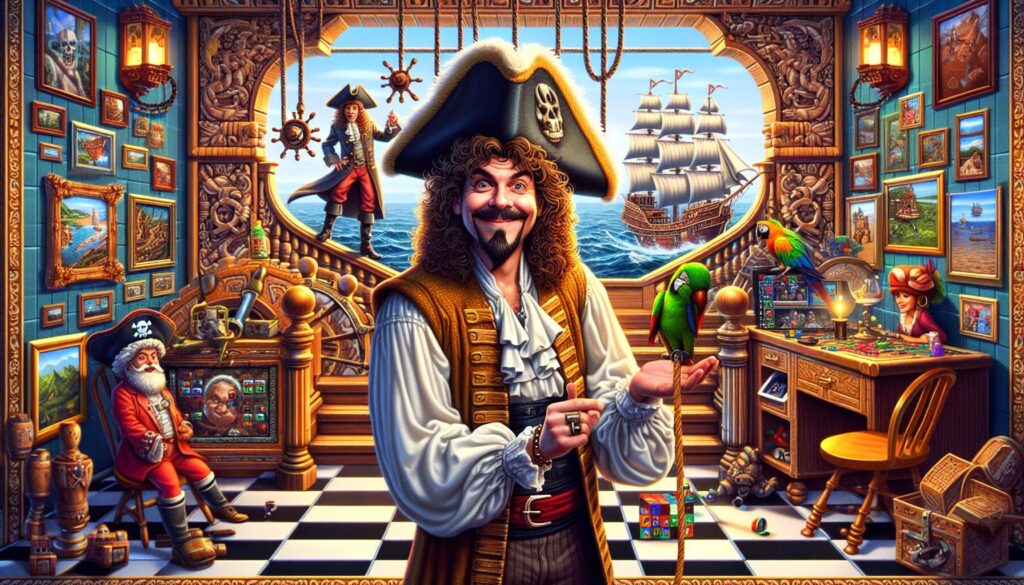
The period between 1987 and 1995 marked the pinnacle of point and click adventure gaming. During this era, two major studios – LucasArts and Sierra On-Line – dominated the genre with groundbreaking titles that defined interactive storytelling.
LucasArts Classics
LucasArts revolutionized adventure gaming through its iconic SCUMM engine titles. The Secret of Monkey Island (1990) introduced pirate apprentice Guybrush Threepwood in a Caribbean adventure filled with witty dialogue and creative puzzles. Day of the Tentacle (1993) showcased time-travel mechanics across three different periods, while Sam & Max Hit the Road (1993) brought comic book-style humor to the genre. Indiana Jones and the Fate of Atlantis (1992) expanded on the movie franchise with multiple solution paths and interactive combat sequences.
Sierra’s Greatest Hits
Sierra On-Line created rich, detailed worlds through their Quest series games. King’s Quest V (1990) pioneered the use of high-resolution VGA graphics and point-and-click interface. Space Quest IV (1991) combined sci-fi parody with time travel elements across different gaming eras. Quest for Glory series (1989-1998) merged RPG elements with adventure gameplay through character classes and combat systems. Gabriel Knight: Sins of the Fathers (1993) elevated storytelling with mature themes, voice acting by Hollywood talent Tim Curry and Mark Hamill.
| Studio | Key Innovation | Release Year | Impact |
|---|---|---|---|
| LucasArts | SCUMM Engine | 1987 | Streamlined interface, better dialogue systems |
| Sierra | VGA Graphics | 1990 | Enhanced visual storytelling, detailed environments |
| LucasArts | iMUSE System | 1991 | Dynamic music that responded to gameplay |
| Sierra | Voice Acting | 1992 | Professional voice talent in adventure games |
Modern Revival of the Genre

Point and click adventure games experienced a significant resurgence in the 2010s, driven by crowdfunding platforms digital distribution. This revival combines classic gameplay mechanics with modern technological innovations to create engaging experiences for both nostalgic fans and new players.
Indie Game Success Stories
Independent developers lead the modern point and click renaissance through critically acclaimed titles that honor the genre’s roots. Wadjet Eye Games’ Blackwell series (2006-2014) demonstrates successful episodic storytelling with its paranormal detective narrative. The creator of Monkey Island, Ron Gilbert, returned to the genre with Thimbleweed Park (2017), raising $626,250 through Kickstarter. Notable indie successes include:
- Broken Age (2014) raised $3.3 million on Kickstarter
- Kentucky Route Zero (2013-2020) earned multiple Independent Games Festival awards
- Machinarium (2009) sold 1.5 million copies across platforms
- Return of the Obra Dinn (2018) won BAFTA’s Game Design Award
Contemporary Game Design
Modern point and click adventures integrate innovative design elements while maintaining core genre mechanics. Key advancements include:
- HD graphics with hand-drawn or 3D rendered artwork
- Dynamic hint systems replacing traditional walkthrough guides
- Cross-platform compatibility for mobile touch interfaces
- Streamlined inventory management with context-sensitive interactions
- Voice acting integration with professional performers
- Multiple narrative branches based on player choices
- Accessibility features like highlighted interaction points
- Automated save systems with quick-load capabilities
These contemporary design elements enhance playability without compromising the puzzle-solving and storytelling aspects that define the genre.
Best Point and Click Games to Play Today
Point and click adventure games offer engaging narratives with challenging puzzles across various settings. Here’s a curated selection of exceptional titles in the genre, spanning both timeless classics and innovative modern releases.
Classic Must-Play Titles
- The Secret of Monkey Island: Special Edition (1990/2009) – Features HD graphics, full voice acting and an intuitive hint system while maintaining Guybrush Threepwood’s iconic journey to become a pirate.
- Day of the Tentacle Remastered (1993/2016) – Showcases time-traveling puzzle mechanics across three distinct periods, with enhanced visuals and restored audio.
- Grim Fandango Remastered (1998/2015) – Combines film noir with Mexican folklore in a stunning art deco world, now with modernized controls and improved lighting.
- Sam & Max Hit the Road (1993) – Delivers sharp wit and absurdist humor through the investigations of a crime-fighting dog and hyperkinetic rabbit duo.
- Gabriel Knight: Sins of the Fathers (1993) – Explores supernatural mysteries in New Orleans with rich storytelling and atmospheric puzzles.
- Thimbleweed Park (2017) – Captures classic point-and-click charm with five playable characters investigating a murder mystery in a quirky town.
- Return of the Obra Dinn (2018) – Features unique 1-bit graphics and innovative deductive reasoning gameplay to solve maritime mysteries.
- Unavowed (2018) – Blends urban fantasy with branching narratives and multiple character backgrounds affecting puzzle solutions.
- Broken Age (2014) – Presents parallel storylines with hand-drawn artwork, professional voice acting and modern interface design.
- Kentucky Route Zero (2013-2020) – Delivers surreal storytelling through atmospheric exploration and magical realism on a secret highway.
| Game Title | Release Year | Notable Features |
|---|---|---|
| Monkey Island: Special Edition | 2009 | HD Graphics, Voice Acting, Hint System |
| Day of the Tentacle Remastered | 2016 | Time Travel Mechanics, Enhanced Audio |
| Return of the Obra Dinn | 2018 | 1-bit Graphics, Deductive Gameplay |
| Unavowed | 2018 | Branching Narratives, Character Backgrounds |
| Kentucky Route Zero | 2013-2020 | Magical Realism, Atmospheric Storytelling |
Impact on Gaming Culture and Storytelling
Point and click adventure games revolutionized interactive storytelling through intricate narratives engaging dialog systems branching storylines. Their influence extends across multiple gaming genres pioneering techniques for character development environmental storytelling narrative design.
Narrative Innovation
- Introduced complex branching dialogues in games like Monkey Island establishing player agency in conversations
- Created memorable characters through detailed backstories personality quirks visual design dialog patterns
- Developed environmental storytelling techniques letting players uncover narratives through exploration interaction
- Established non-linear storytelling formats allowing players to experience stories at their own pace
Industry Standards
- Pioneered professional voice acting in games starting with titles like King’s Quest V Gabriel Knight
- Established cutscene conventions for storytelling using dynamic camera angles character close-ups dramatic timing
- Created inventory-based puzzle design systems adopted by RPGs action-adventures modern indie games
- Developed interface design principles for interactive storytelling still used in contemporary games
| Innovation | Impact | Notable Examples |
|---|---|---|
| Dialog Trees | Player Choice Systems | Monkey Island Indiana Jones |
| Environmental Storytelling | World Building | Myst Riven |
| Character Development | NPC Interactions | Sam & Max Day of the Tentacle |
| Interface Design | User Experience | SCUMM Engine Sierra Interface |
Cultural Impact
- Inspired generations of game developers creating story-driven experiences
- Influenced film television writing through interactive narrative techniques
- Created enduring characters franchises recognized beyond gaming communities
- Established gaming as legitimate storytelling medium alongside books films
- Developed critical thinking skills through logical puzzle-solving
- Enhanced reading comprehension through text-based interactions
- Improved problem-solving abilities through inventory management
- Encouraged exploration observation attention to detail
These storytelling innovations continue inspiring modern game development demonstrating point and click adventures’ lasting impact on interactive entertainment.
Point and click adventure games have proven their staying power through decades of gaming evolution. I’ve watched this beloved genre transform from pixelated classics to stunning modern adventures while maintaining its core appeal of compelling storytelling and clever puzzles.
Whether you’re discovering these games for the first time or revisiting old favorites there’s never been a better time to dive into the genre. Today’s titles offer the perfect blend of nostalgic charm and contemporary innovation making them more accessible and enjoyable than ever.
The future looks bright for point and click adventures as talented developers continue to push creative boundaries while honoring the traditions that made these games special in the first place.